Why You Must Interrupt Anxiety Early (Or It Becomes a Habit)
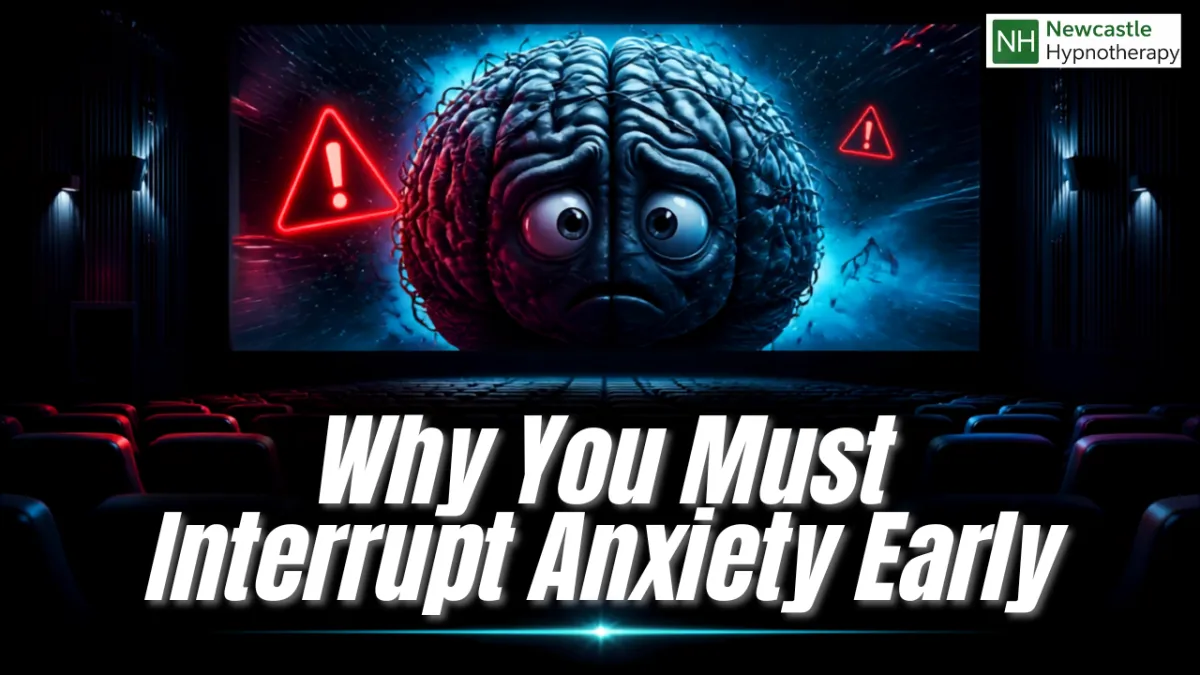
Imagine you have just started a new job at a cinema. You are the head of customer satisfaction, and your role is simple: make sure everyone who comes to watch a movie enjoys it as much as possible, in comfort, from start to finish.
On your first shift, you welcome every customer as they arrive. You help them find their seats and make sure they are settled and happy before the film begins.
The adverts roll, then the trailers, and the excitement builds.
Just before the main feature starts, a polite notice appears on screen asking everyone to switch off their phones. It is a simple request that stops distractions and lets everyone enjoy the film properly.
The movie begins. The audience is hooked. Big smiles all round.
Then, twenty minutes in, you spot a child near the front switch her phone back on to check social media. The bright light from her screen disturbs the people sitting around her.
A few minutes later, a boy a few rows back does the same thing.
Over the next ten minutes, more and more children start switching their phones on. Each one disturbs the people nearby, and each one seems to encourage another child to do the same.
Before long, customers can no longer focus on the film. They are surrounded by a sea of bright screens. They start complaining. Some ask for their money back.
The manager gets involved and calls you into the office. There is one question waiting for you.
When should you have stepped in to stop the bad behaviour?
The Answer Is Obvious, and So Is the Lesson
You already know the answer. You should have stepped in the moment the first phone came on, not after the fifth, not after the twentieth, and definitely not once the whole cinema had turned into a distraction.
Anxiety works in exactly the same way.
The moment anxiety starts, it needs to be interrupted straight away. Left alone, it does not stay still. It spreads, it repeats, and it strengthens, in the same way one phone screen encouraged the next.
Why Anxiety Gets Stronger the Longer You Wait
Every time we practice anxiety, even without meaning to, we make the pattern easier to run next time. The brain treats anxious thoughts and reactions like a habit. The more often that habit fires, the more automatic it becomes, until it starts triggering on its own, often before we have even noticed what set it off.
This is why anxiety so often feels like it is getting worse over time rather than better. It is not that life is becoming harder. It is that the anxious response has been rehearsed so many times it now runs on autopilot.
Just like in the cinema, the fix is not complicated. As soon as we notice the unwanted behaviour starting, whether that is a racing heart, a spiralling thought, or that familiar knot in the stomach, we need to interrupt it and replace it with something better. Catch it early enough, and it never gets the chance to spread.
How We Help People Interrupt Anxiety Early
For more than ten years, we have helped thousands of anxiety sufferers learn to recognise their anxiety earlier and interrupt it before it takes hold. We use a combination of clinical hypnotherapy, NLP, and nutritional therapy to address both the mental patterns and the physical factors that feed anxiety.
The results speak for themselves. Most clients see real, lasting change within four to six weeks, often avoiding months or even years of ongoing therapy.
See the Results for Yourself
Take a look at our results, reviews, and awards, and find out how anxiety treatment can work for you. Then book your free anxiety assessment call and take the first step toward catching anxiety before it takes over.
Useful Anxiety Links
Award-Winning Anxiety Treatment & Therapy In Newcastle & Online
Can Newcastle Hypnotherapy Help Social Anxiety? A 10 Year Track Record Says Yes
How Long Does Anxiety Therapy Take in Newcastle? Realistic Timelines Explained