Exam and Performance Anxiety: How Hypnotherapy Helps You Stay Calm When It Counts
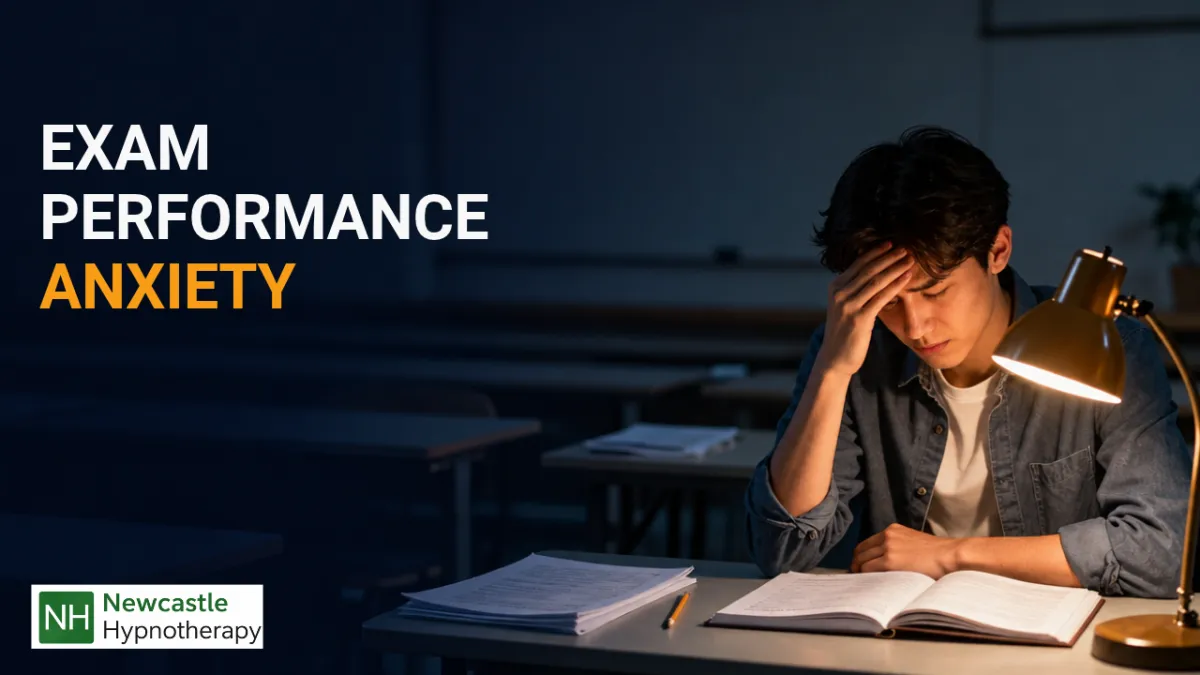
You have prepared. You know the material. You have practised. And yet the moment the exam paper lands, the interview begins or the spotlight turns on you, your mind goes blank, your heart pounds and your hands shake. If that sounds familiar, you are dealing with performance anxiety, and it is one of the most common and most treatable forms of anxiety.
Learn more about performance anxiety help in Newcastle and online.
Why does performance anxiety happen?
When your brain decides a situation is high stakes, it can trigger the same survival response it would use to protect you from physical danger. Adrenaline rises, your heart speeds up, your breathing gets shallow and blood flow shifts away from the parts of the brain used for memory and clear thinking. That is why people blank on things they know perfectly well.
In other words, it is not a knowledge problem, and it is not weakness. It is an automatic body response firing in the wrong place. We explain this in more detail in the psychology of public speaking anxiety.
Who gets it?
Students facing GCSEs, A-levels, university exams or professional qualifications
Professionals facing interviews, presentations, pitches and appraisals
Musicians, actors, dancers and athletes before performances and competitions
Anyone driving tests, medical procedures or other high-pressure moments
Often, high achievers are the most affected, because the stakes feel personal. See why high performance often leads to high anxiety.
How hypnotherapy helps
Because performance anxiety is a learned automatic response, hypnotherapy can be a good fit. It works at the level where the response is triggered, helping your mind and body rehearse calm and focus in exactly the situations that currently set off panic. Typically that involves:
Mental rehearsal: in the relaxed state, you vividly rehearse the event going well, so your brain treats it as familiar rather than threatening.
Changing the trigger response: teaching your nervous system a new default when the pressure rises.
Anchoring calm: using NLP techniques to create a quick, reliable way to access a calm, focused state on demand.
Reframing the story: shifting thoughts like "I am going to fail" that feed the cycle.
The role of the body
Sleep, caffeine, blood sugar and diet all influence how reactive your nervous system is on the day. That is why our approach includes nutritional coaching alongside clinical hypnotherapy and NLP. Small changes, like not relying on energy drinks before an exam, can make a noticeable difference.
Practical tips you can use today
Slow your breathing with a longer out-breath than in-breath for a couple of minutes before the event.
Rehearse the event in your mind, picturing yourself calm and capable, not just picturing the problem.
Plan your morning so nothing adds stress, including sleep, food and travel.
Remind yourself that nerves and excitement feel nearly identical, and that a little adrenaline can help performance.
For a step-by-step self-help approach, our self-hypnosis guide is a good place to begin.
How long does it take?
Because performance anxiety is a specific pattern, many clients see real change within 4 to 6 weeks, and sooner if the event is close and the issue is focused. It helps to start early, ideally a few weeks before the big day, so that the new response has time to settle.
Get in touch
We have helped thousands of clients since 2014, including students, professionals and performers. If you have an exam, interview or performance coming up, contact Newcastle Hypnotherapy and we will talk through how we can help. For related fears, see our pages on public speaking anxiety in Newcastle and social anxiety.
Useful Anxiety Articles
Read: Anxiety and Alcohol: Why "Hangxiety" Happens and What It's Really Telling You
Read: Anxiety Treatment Near Gateshead: What Are Your Options?