Anxiety and Alcohol: Why "Hangxiety" Happens and What It's Really Telling You
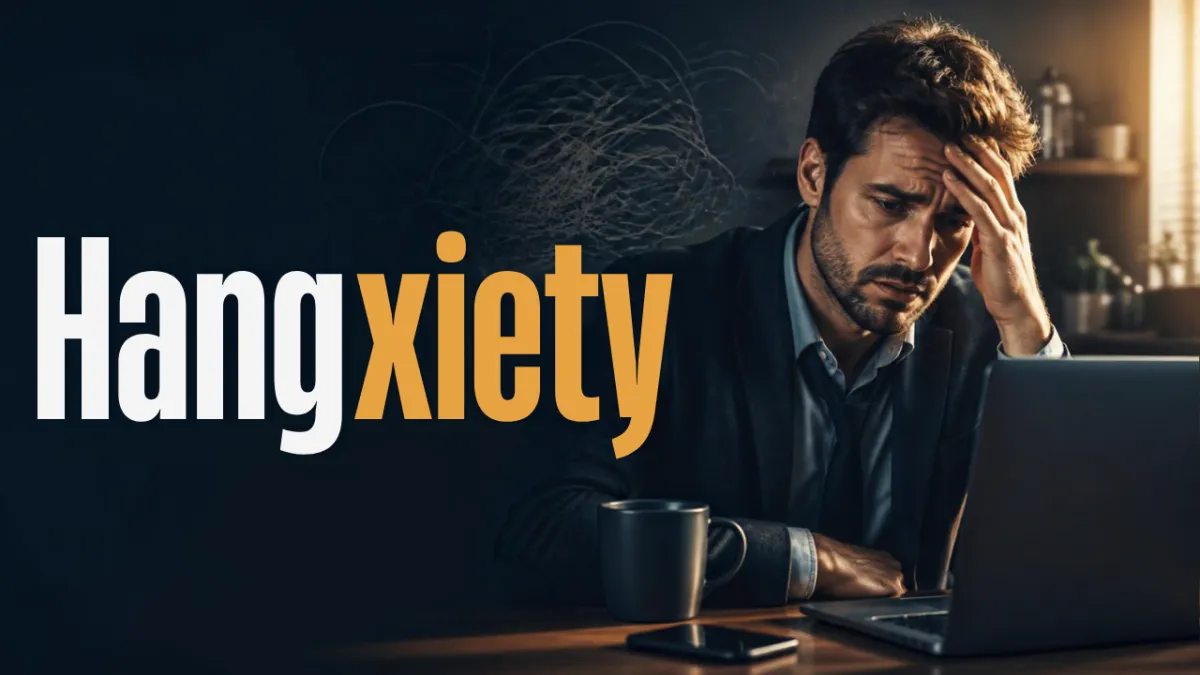
You know the feeling. It's the morning after a fairly normal night out, nothing dramatic happened, and yet you wake up with a sense of dread sitting in your chest before you've even worked out why. You start replaying the evening, wondering if you said something wrong, feeling embarrassed about nothing in particular, and the day feels harder to face than it has any real reason to be. That's "hangxiety," and if it's become a familiar part of your week rather than an occasional after-effect, it's worth understanding what's actually going on.
Learn more about award winning Fast Anxiety Therapy In Newcastle
What's Actually Happening in Your Body
Alcohol is a depressant, and part of how it works is by temporarily boosting a calming brain chemical called GABA while suppressing the ones that keep you alert. It feels relaxing in the moment for exactly that reason. But your brain doesn't like being pushed out of balance, so once the alcohol clears, it swings the other way, GABA drops, and stress chemicals rise to compensate. That chemical rebound is a large part of where next-day anxiety comes from. It's not "in your head." It's your nervous system correcting for the night before.
Poor sleep makes it worse. Alcohol disrupts the deep, restorative stages of sleep even when it helps you fall asleep faster, so you wake up already running on a nervous system that hasn't properly reset.
Why It Becomes a Cycle
Here's where it gets tricky. A lot of people who experience hangxiety are already carrying some baseline anxiety, and alcohol becomes the thing that quiets it in the evening. Have a drink, the social nerves settle, the work worries fade into the background for a few hours. Then the next day arrives with the rebound anxiety in tow, which can feel bad enough that having another drink that evening to "take the edge off" starts to feel like the only relief available. That's the loop: anxiety leads to drinking, drinking leads to worse anxiety, worse anxiety leads to more drinking.
This is especially common among the professionals we see in our clinic. A drink after a stressful day starts as a genuinely useful pressure valve, and gradually becomes the main tool the nervous system relies on to switch off at all.
The Questions Worth Asking Yourself
Has alcohol quietly become your main way of managing stress at the end of the day?
Does the anxiety the next day feel worse than it used to?
Are you drinking to relax, or to stop the anxiety that's already there?
Would you find it hard to have a genuinely relaxed evening without a drink?
Answering honestly isn't about judgement. It's about recognising whether alcohol has become a way of managing anxiety rather than something you're simply enjoying.
Why Cutting Back Alone Rarely Fixes the Anxiety
Plenty of people try to break the cycle by cutting down, and find the underlying anxiety is still there, sometimes more noticeable than before, because the thing that was masking it has been removed. That's usually the moment people realise the drinking was never really the core issue. It was a coping strategy for anxiety that was already present and never properly addressed.
This is where our approach differs from simply being told to "drink less." We work with the anxiety underneath, using Clinical Hypnotherapy and NLP to address what's actually driving the stress response, alongside Nutritional Coaching to help stabilise the blood sugar and sleep disruption that alcohol and anxiety both feed on. When the anxiety itself resolves, usually within four to six weeks, the reliance on alcohol to manage it tends to ease naturally, because there's nothing left to self-medicate.
If This Sounds Familiar
If you recognise this pattern in yourself, you're not alone, and you don't need to have a "drinking problem" in the way that phrase usually gets used for this to be worth addressing. You just need to be ready to deal with the anxiety directly rather than managing it with something that makes it worse the next day.
Newcastle Hypnotherapy has helped thousands of clients across the North East get to the root of anxiety like this, backed by over 100 five-star Google reviews and seven consecutive years as a ThreeBestRated-rated clinic. Book a free, no-obligation assessment call to talk it through.
If drinking has become something you feel you can't control, your GP or a service such as Frank can offer further support alongside this work.
Learn more: Award Winning Anxiety Therapy In Newcastle & Online.
Read: Mark Morley Anxiety Therapist At Newcastle Hypnotherapy
Book: Your Free Anxiety Hypnotherapy Assessment.