The Keys to St Nicholas Hospital: A Gosforth Family Story
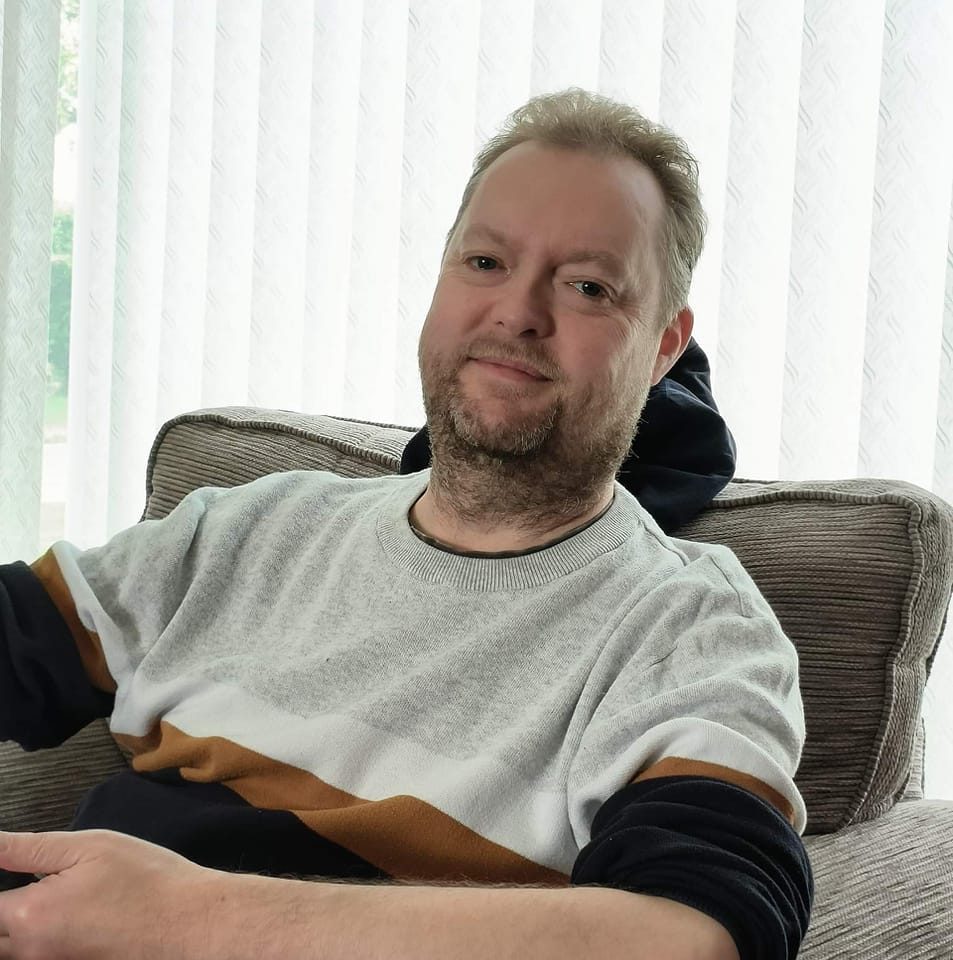
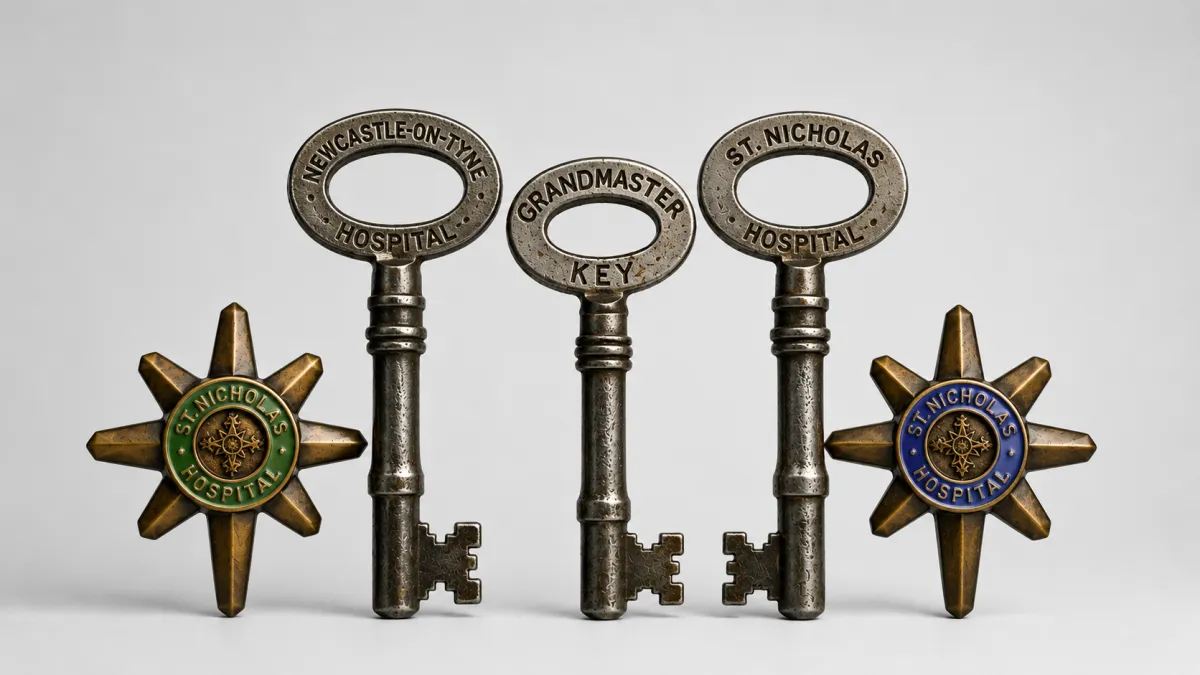
I still have the keys to St Nicholas Hospital.
They sit with me now as a valued antique, a physical object that connects me to a place, a person, and a story that I have been thinking about how to tell for a long time. St Nicks, as anyone in Gosforth knows it, is one of the great institutions of the North East. Most people in this part of Newcastle have driven past its Victorian buildings, glimpsed the grounds, and felt the quiet weight of a place that has been here longer than anyone alive can remember. I knew it differently. I knew it from the inside.
This is the story of that building, my father, and how the two of them shaped everything that came after.
St Nicholas Hospital: A Brief History
St Nicholas Hospital has stood in Gosforth since 1869, when it opened as the Newcastle upon Tyne Borough Lunatic Asylum on a 50-acre site at Coxlodge. From the beginning it was one of the most significant NHS mental health institutions in the North East of England, expanding over the decades to include the East and West Pavilions, and the Jubilee Theatre, which opened in 1899 and became a genuine centre of community life within the hospital grounds.
During the First World War the patients were evacuated and the site became Northumberland No.1 War Hospital for wounded soldiers. In 1948, when the NHS was founded, the hospital was brought under its umbrella and renamed St Nicholas Hospital. The Victorian buildings, the grounds, the culture of the place -- all of it carried forward into a new era of publicly funded mental health care.
By the time my father arrived, St Nicks was one of the most important NHS psychiatric hospitals in the region, and he would spend the rest of his working life there.
Alban Francis Morley: Director of Nursing
My father, Alban Francis Morley, served as Director of Nursing Services at St Nicholas Hospital for many years. He was a well-known and deeply respected figure within the NHS, within the local Gosforth community, and far beyond. He passed away some years ago, but his name still carries real weight among those who worked alongside him, and among the many people whose care he took seriously as a professional obligation and a personal calling.
What I have come to understand more fully as an adult is quite how significant his contribution to NHS mental health nursing actually was -- not just at St Nicks, but nationally.
In 1980, a psychiatric nurse named Seamus Killen put out a call through the nursing press, asking whether there was appetite for a dedicated professional association for psychiatric and mental health nurses. The response was overwhelming. A founding meeting was held in October 1981. A steering committee was formed, a constitution was drafted, and in April 1982 the Psychiatric Nurses Association (PNA) held its first annual general meeting.
At that meeting, my father was elected President.
The published record states it plainly:"President -- Mr A. F. Morley (Director of Nursing Services, St Nicholas Hospital, Gosforth, Newcastle)."
He worked closely with Seamus Killen, the man who had first put out the call for the association and who became its founding Secretary. The two were colleagues and friends, and their collaboration was central to getting the PNA off the ground in those early years.
The PNA was not a minor organisation. From its earliest days it took on the fight for proper representation of mental health nurses within NHS legislation and governance. It gathered 6,550 signatures from qualified nurses and presented its case directly to Kenneth Clarke, then Minister of Health, as well as to senior officials at the UK Central Council for Nurses, Midwives and Health Visitors. It engaged with the World Health Organization and the European Commission on behalf of psychiatric nurses across the United Kingdom. It established regional branches, national conferences, and a bi-monthly journal called Mental Health Nursing published in partnership with the Nursing Times.
The aims of the association, as set out at its founding, were to advance the practice of psychiatric nursing, improve standards of patient care, and give mental health nurses a professional voice that the NHS had consistently denied them. My father dedicated a great deal of voluntary time to making those aims real.
He was, in short, one of the people who helped change how psychiatric nursing was understood and valued in this country. He did it largely without recognition outside professional circles, because that was simply the kind of man he was.
Growing Up at St Nicks
I was a child wandering those corridors long before I understood any of that history.
My father's role at St Nicks meant the hospital was woven into our family life in a way that would be unusual for most people. I attended events on the grounds, got to know members of staff, and experienced the hospital as something far more human and ordinary than its Victorian architecture might suggest. The people inside were not a category apart. They were people, dealing with things that were difficult, in a place that was trying -- with varying degrees of success, as the NHS always has -- to help them.
That was my first education in mental health. Not from a textbook. From being there.
I also, in a detail that I find myself mentioning more often than I expected, ran mobile discos at the hospital. Including one in the secure ward. If you want to learn how to read a room quickly, I can recommend it.
The keys I still have are a connection to all of that. To my father's decades of work. To the staff I knew. To the events, the corridors, the particular atmosphere of a place that held a great deal of human difficulty and, at its best, a great deal of human care.
The NLP Connection: St Nicks as a Training Ground
There is another chapter in the St Nicks story that I think the local community will find interesting, and which I was personally part of.
Cricket Kemp, one of the most respected NLP and therapy trainers in the North East and the founder of NLP North East -- which she has led since 1989 -- used training rooms at St Nicholas Hospital for her NLP courses. A number of the hospital's own NHS staff went through that training and went on to become therapists and practitioners themselves.
Cricket's daughter, Dr Caitlin Walker, is now internationally recognised as one of the world's leading authorities on Clean Language and Systemic Modelling. I trained with both of them at NLP North East, and that training has shaped how I work with clients to this day.
The same building where my father spent his career improving NHS psychiatric care was also, by the time I was finding my own path, a place where some of the most forward-thinking therapy training in the region was happening. The threads connect in ways that still surprise me when I trace them back.
What St. Nick's Gave Me
I am a Clinical Hypnotherapist, Master NLP Practitioner, EFT Practitioner, Time Line Therapy Practitioner and Nutritional Therapist. I founded Newcastle Hypnotherapy, now at Dobson House on Regent Farm Road in Gosforth -- not far from St Nicks -- more than ten years ago. We have helped thousands of people across the North East with anxiety, depression, stress, phobias and a wide range of mental health challenges.
None of that happened in spite of where I grew up. It happened because of it.
My father's generation believed that psychiatric nursing deserved to be taken seriously as a profession, that mental health patients deserved better care, and that the NHS had an obligation to provide it. He gave years of voluntary time to that belief, at a national level, at a time when no one was asking him to. His influence on me was not through any single conversation. It was through watching someone live out a set of values consistently, over a lifetime.
When the NHS offered me disability and medication as a child struggling with anxiety, a stammer and a range of other challenges, it was my father who said there had to be a better way. He was right. Finding that better way became my life's work, and it is the work I do every day at Newcastle Hypnotherapy in Gosforth.
Do You Remember St Nicks?
Gosforth has a long memory, and St Nicholas Hospital is part of it. If you worked there, if a family member was cared for there, if you were part of that community in any way, I would genuinely love to hear from you.
And if you have your own story about how mental health, therapy or personal change has touched your life in the North East, I would love to hear that too.
The keys sit here as a reminder that places carry history, families carry history, and sometimes the most important things that shape who we become are the things we walked past every day as children without fully understanding what they meant.
My father helped build something that mattered. This is a small attempt to make sure that is not forgotten.
About Newcastle Hypnotherapy
Newcastle Hypnotherapy is based at Dobson House, Regent Farm Road, Gosforth, Newcastle upon Tyne NE3 3PF. We offer anxiety treatment, hypnotherapy, NLP, EFT and nutritional therapy, in person in Gosforth and online across the UK.
If you would like to speak with Mark about how we can help, the first step is a free assessment call.
Book Your Free Assessment Call
Or call 07568 455 809
Learn About Mark Morley - the mental health and anxiety therapist
Learn More About Newcastle Hypnotherapy - https://www.newcastle-hypnotherapy.com/
Newcastle Hypnotherapy Anxiety Therapy & Treatment - https://www.newcastle-hypnotherapy.com/anxiety-treatment-newcastle