Why the NHS Keeps Failing People with Anxiety Disorders
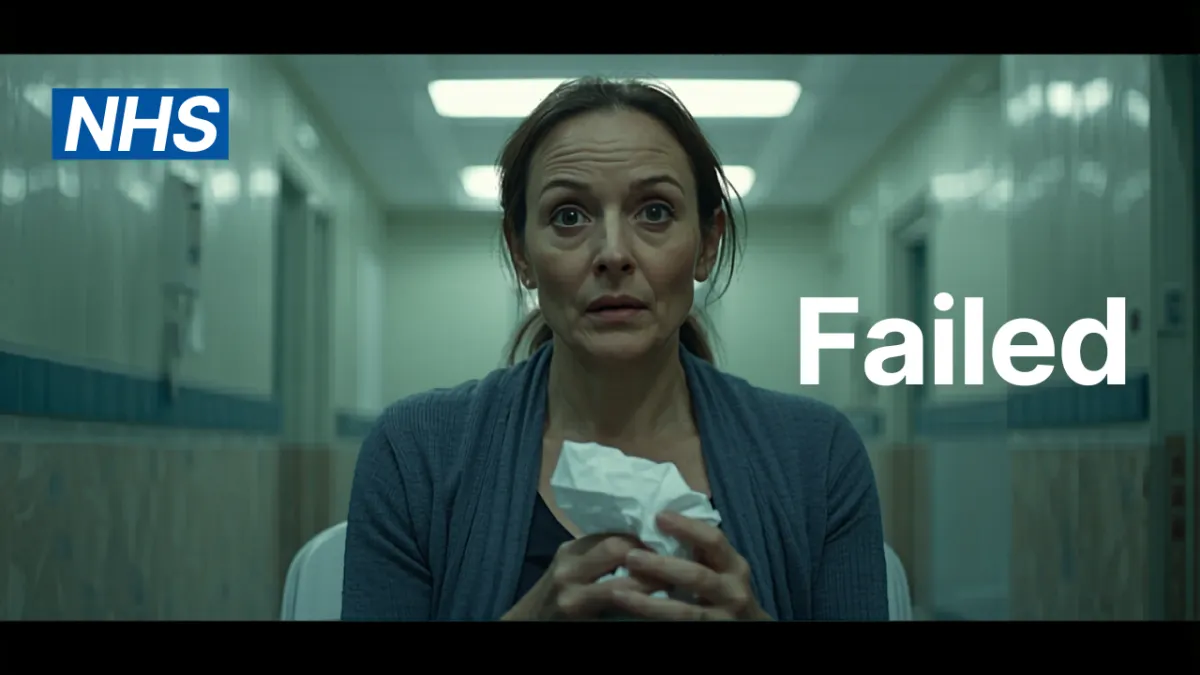
If you've ever sought help for anxiety through the NHS, there's a good chance you already know the experience. A referral, a wait — often months — and eventually a block of CBT sessions or a course of counselling that leaves you talking about your anxiety without ever feeling any better.
You're not imagining it. The way the NHS currently approaches anxiety disorders has some serious structural problems, and millions of people are paying the price.
In this article, we're going to look honestly at what NHS anxiety treatment actually involves, why it falls short for so many patients, and what a more effective approach looks like.
Effective anxiety treatment in Newcastle and Online.
What the NHS Actually Offers for Anxiety
When you present to your GP with anxiety, the current NHS pathway typically routes you towards one of two options: medication (usually SSRIs or beta-blockers) or a referral to an IAPT service (Improving Access to Psychological Therapies), which predominantly delivers CBT — cognitive behavioural therapy.
CBT became the gold standard NHS anxiety treatment largely because it is structured, time-limited, and easy to measure. It's cheap to deliver at scale and fits neatly into the target-driven reporting that NHS commissioning requires.
But there's a growing body of evidence — and an enormous amount of patient experience — that suggests this one-size-fits-all model simply isn't working for a large proportion of people.
The Problem with Talking About Anxiety Without Resolving It
Here's one of the most fundamental issues with how NHS anxiety treatment is structured: it focuses overwhelmingly on understanding your anxiety rather than relieving it.
Talking about your problems is not the same as solving them. Understanding why you feel anxious doesn't teach your nervous system how to feel safe.
Traditional counselling and even CBT spend a significant amount of time exploring the history and triggers of your anxiety. You might map out thought patterns, journal your worries, and identify the source of anxious beliefs. This can feel validating — and for some people, that insight is useful.
But for many people with anxiety disorders, especially those who have been anxious for years, this approach misses something crucial: the body.
Anxiety is not just a thinking problem. It's a physiological state. The nervous system has learned to treat certain situations — or sometimes just everyday life — as a threat. No amount of talking, reframing, or completing thought records changes that underlying pattern at the level where it lives: in the subconscious mind and the body's automatic threat responses.
What's Missing from the NHS Approach
When people say NHS anxiety treatment didn't work for them, what they typically mean is that they still don't know how to calm themselves down when anxiety strikes. They may understand their anxiety better. They may be able to label a thought as "catastrophising." But in the moment — when the chest tightens, the heart races, and the mind spirals — they have no tools.
Effective anxiety treatment should give people practical techniques that work in real time. Things like:
Tools to interrupt the body's threat response quickly
Ways to shift the nervous system from "fight or flight" back to calm
Techniques to reduce the emotional charge attached to anxious memories
Methods to retrain the subconscious mind's default settings around safety
Strategies that can be used independently, outside of a therapy room
Standard NHS CBT rarely teaches any of these. The focus is on cognitive restructuring — changing how you think about situations — which is a top-down approach that doesn't address the bottom-up biological reality of an anxious nervous system.
Hypnotherapy for anxiety in Newcastle & Online
The Structural Failings of NHS Anxiety Treatment
Beyond the clinical model itself, there are systemic problems with how the NHS handles anxiety that compound the issue for patients.
Waiting lists. In many parts of the UK, waits for IAPT services exceed 18 weeks. For someone in the grip of acute anxiety, that delay can allow the condition to become significantly more entrenched.
Session limits. NHS CBT is typically capped at 6–12 sessions. Complex anxiety disorders that have built up over years are unlikely to resolve in a handful of hour-long appointments.
One-size-fits-all delivery. Many NHS anxiety patients receive guided self-help — workbooks and worksheets — rather than individual therapy. The person rarely gets the human connection and tailored support that meaningful change requires.
No continuity of care. You may see a different therapist each time, or be handed from service to service, meaning no one ever truly understands your individual history.
Reliance on medication as a first resort. GPs under time pressure often reach for an SSRI prescription before a referral. Medication can be helpful for some people, but does nothing to address the underlying patterns driving anxiety.
Why CBT Alone Isn't Enough
CBT is not ineffective — it has genuine evidence behind it and helps a meaningful number of people. But it is a partial tool being used as if it were a complete solution.
The deeper problem is that CBT primarily operates at the level of conscious thought. But anxiety is largely an unconscious, automatic process. The part of the mind that fires the alarm when you feel anxious is not your rational, analytical mind — it's the survival-oriented subconscious, operating on patterns laid down through experience.
Changing those patterns requires working at that deeper level. Approaches like hypnotherapy, EMDR, EFT (Emotional Freedom Technique), and NLP work with the subconscious directly — which is why they tend to produce results much faster than years of talking therapy, and why the results last.
What Effective Anxiety Treatment Actually Looks Like
The most significant difference between effective anxiety treatment and the standard NHS pathway is this: effective treatment gives you tools you can use, not just insight you can think about.
Working with an experienced anxiety specialist — outside the NHS model — typically involves:
Understanding the specific way anxiety has developed for you as an individual
Learning fast, practical techniques to calm your nervous system in the moment
Using hypnotherapy to access and update the subconscious patterns driving the anxiety
Addressing the root experiences that taught your mind to feel unsafe
Building genuine confidence that the anxiety is resolving — not just being managed
Most clients who take this approach begin to notice meaningful changes within a handful of sessions — not because it's a magic fix, but because it's working with the right part of the mind in the right way.
You Don't Have to Wait for the NHS
If you're struggling with anxiety right now, you don't have to join a waiting list and hope for the best. Specialist anxiety treatment is available that will actually teach you how to feel calm — not just how to think differently about feeling anxious.
We work with people across Newcastle and the North East who have often spent years going through NHS pathways without lasting relief. In most cases, we see significant progress in 3–5 sessions.
Ready to take the next step? Download our free Anxiety Relief Pack — practical tools you can use today — or book a no-obligation anxiety assessment call to talk through what's going on for you.
Learn more about the most effective treatment for anxiety in Newcastle and online:
https://www.newcastle-hypnotherapy.com/anxiety-treatment-newcastle
Useful Anxiety Treatment & Therapy Blog Articles.
Overcoming Anxiety, Panic Attacks & Trauma: Rob's Story
Does Hypnotherapy Actually Work For Anxiety? Here's What The Science Says
Anxiety Treatment in Newcastle: Your Complete Guide to Getting Help
How a Newcastle Professional Became Anxiety-Free in 3 Weeks — Marie's Story
What Happens During Your First Hypnotherapy Session for Anxiety in Newcastle