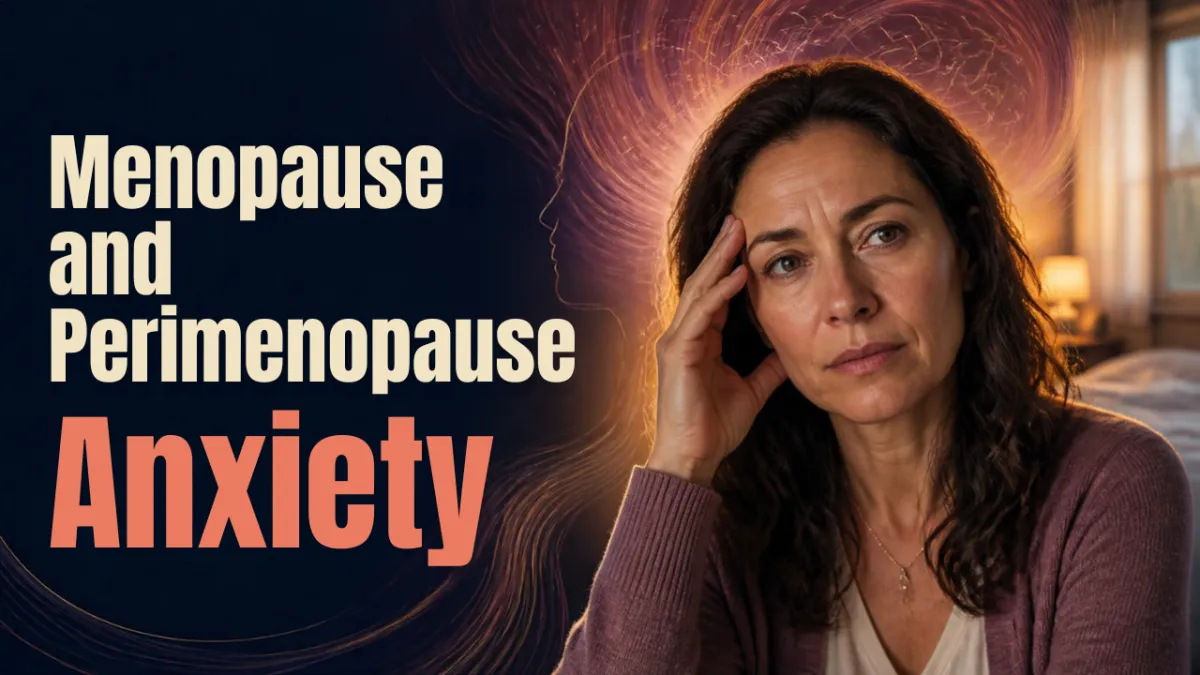
Menopause and Perimenopause Anxiety: Why It Hits So Hard, and What Actually Helps
A lot of the women who come to see us say some version of the same thing: "I don't recognise myself." Not because anything dramatic has happened in their lives, but because anxiety has arrived, or sharply worsened, seemingly out of nowhere, often in their 40's or early 50's. They've usually never had anxiety like this before. Many assume something is wrong with them psychologically before anyone mentions perimenopause as a possible cause.
It's one of the most under-discussed parts of the menopause transition. Hot flushes and disrupted sleep get talked about. Sudden, sharp, sometimes overwhelming anxiety, often the first symptom to appear, rarely does.
Learn more about Specialist Anxiety Therapy
Why Anxiety Shows Up During Perimenopause
Oestrogen does more in the body than regulate the reproductive cycle. It also plays a significant role in supporting serotonin and GABA, two of the brain's main calming chemicals. As oestrogen levels start fluctuating unpredictably in perimenopause, often years before periods actually stop, that calming support becomes unreliable too. The result, for a lot of women, is anxiety that feels different from anything they've experienced before: sharper, more physical, and much harder to reason your way out of.
Falling progesterone adds to this. Progesterone has a naturally calming effect on the nervous system, and as it declines, that buffer against stress weakens right at the point when sleep is also being disrupted by night sweats, which only adds fuel to the anxiety.
What It Often Looks Like
Sudden waves of anxiety or panic that seem to come from nowhere, sometimes even waking you at night
A racing heart or adrenaline surge with no obvious trigger
Irritability or a much shorter fuse than usual
Difficulty concentrating, alongside a persistent sense of dread
Feeling anxious about things that never used to bother you
Many women describe it as feeling like a different, more anxious version of themselves has quietly taken over, which is often deeply unsettling on top of the anxiety itself.
Why It's So Often Missed or Dismissed
Because perimenopause can start in your early-to-mid 40s, well before periods become irregular, the connection to hormones often isn't made, by the woman experiencing it or by whoever she first mentions it to. It gets put down to stress, work pressure, or "just getting older," and the anxiety gets treated in isolation from what's actually driving it. That's part of why standard anxiety treatment can fall short here: it addresses the anxiety without accounting for the hormonal shift feeding it.
How We Approach It
We don't treat the hormonal side directly, that's a conversation for your GP, and HRT is a genuine, well-evidenced option worth discussing with them if you haven't already. What we focus on is the anxiety response itself: calming an overactive nervous system, interrupting the anxiety spirals that fluctuating hormones can trigger, and rebuilding a sense of steadiness that hormonal changes have temporarily disrupted.
Our three-pillar approach, Clinical Hypnotherapy, NLP, and Nutritional Coaching, is particularly relevant here, because blood sugar stability and sleep quality both have a direct effect on how intensely perimenopausal anxiety is felt. Getting those foundations right, alongside the hypnotherapy and NLP work, is often what makes the biggest difference. Most clients see real, lasting change within four to six weeks, working alongside whatever medical support they're also using.
You're Not Losing Your Mind, and You're Not Stuck With This
If anxiety has shown up or sharply worsened in your 40s or early 50s and doesn't feel like "you," it's worth considering perimenopause as part of the picture, and it's absolutely worth addressing properly rather than assuming it's just something to push through until it passes.
Newcastle Hypnotherapy has helped thousands of clients across the North East get to the root of anxiety like this, backed by over 100 five-star Google reviews and seven consecutive years as a ThreeBestRated-rated clinic. Book your free, no-obligation assessment call and we'll talk through what's going on and what would actually help.
Read: Mark Morley The Anxiety Therapist In Newcastle